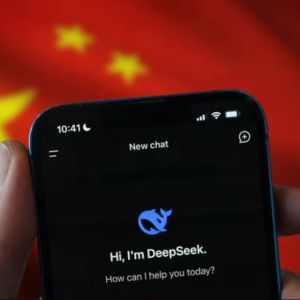
DeepSeek has frozen its second fundraising round after telling some investors that the signing process will not happen for now. The company had been preparing to collect fresh capital weeks after closing its first deal. The freeze followed private remarks made by Liang Wenfeng, founder of the lab, which had gone viral on social media. It is said that Liang was displeased with the leakage of information from an investment meeting conducted some time ago, according to Bloomberg. The initial round of financing closed in June, with $7 billion being infused into the lab. Social media was flooded with posts purportedly containing the transcript of a meeting that Liang had organized with certain unnamed participants, but Bloomberg could not verify its authenticity. Chinese outlet Yicai reported that Liang spoke about China’s need for Nvidia (NASDAQ: NVDA) hardware and the country’s lower level of AI development compared with the United States. DeepSeek may reopen the fundraising later, and the talks remain alive. DeepSeek keeps investors waiting while it reviews a 10 billion yuan funding plan The company had been seeking at least 10 billion yuan in the new round. That figure could have grown if more investors had joined. DeepSeek was also asking backers to accept a pre-money value of at least 480 billion yuan, above the roughly $50 billion figure used during its first financing. The earlier round attracted Tencent Holdings (HKEX: 0700) and Contemporary Amperex Technology Co. Ltd. (SZSE: 300750). DeepSeek started the follow-on talks soon after that deal closed. Some agreements were due to be signed within days before the company verbally told certain backers that the timetable had changed. It is not known whether all potential investors were informed in the same way. DeepSeek can choose to start again, alter the size of the round, or even go ahead with fewer investors. There have been no updates regarding the next closing date. Furthermore, DeepSeek is in preparation for listing itself as a public company. The firm may be set to file this year. Through this move, DeepSeek would be able to become one of the highly watched AI companies in China to be listed in the stock exchange, amidst Beijing’s effort to build a tech ecosystem independent of US gear. China promotes domestic chips as access to Nvidia gets difficult and expensive The government in China has been concerned for some time that the AI firms within China rely too heavily on Nvidia. Most Chinese engineers have designed their AI systems with Nvidia software, which is not compatible with their domestically produced hardware. Nvidia created China-specific products that stayed below limits imposed by U.S. export rules. Chinese buyers also used other routes. Some purchased restricted processors through traders who sent them across third countries before they finally reached mainland China for buyers. In reply, Beijing brought together university scientists and semiconductor experts in a national semiconductor project. This was different from the normal practice, since these plans would be made internally by senior ministries and departments. China has also managed to collect almost $48 billion towards a semiconductor state fund in 2024. Progress from local manufacturers later gave officials more room to limit foreign chips. Huawei prepared its Ascend 950, and early users found its performance stronger than expected. Alibaba (NYSE: BABA; HKEX: 9988) also reported gains in its processor work. Around the same period, Nvidia Chief Executive Jensen Huang visited Beijing after Trump approved sales of the lower-powered H20 chip. U.S. Commerce Secretary Howard Lutnick said on television that China could remain dependent on American systems by receiving Nvidia’s “fourth-best product.” Nvidia later tried to recover more China business. Trump said in December that he told Xi Jinping the company could sell the stronger H200. Chinese officials were already taking a harder line. They summoned technology companies, sometimes weekly, to ask whether the H200 was truly needed. By January, some firms were told to buy the H200 only when necessary. They also had to promise greater use of Chinese processors. That policy sent more orders to local chipmakers, but factories could not raise output fast enough, causing shortages. The pressure also triggered a rise in smuggling. Chinese suppliers indicated that smuggled Nvidia graphics processing units increased their prices by more than double in six months because of strict U.S. law enforcement and delayed shipments through the Middle East region. Companies started creating massive computing arrays utilizing the latest Nvidia Blackwell processors. Don’t just read crypto news. Understand it. Subscribe to our newsletter. It's free .