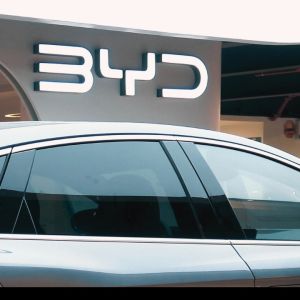
BYD started 2026 with a big drop. The company sold 210,051 cars in January, down from 300,538 the year before. That’s a 30% decline, and it didn’t come out of nowhere. Buyers rushed to get cars before China’s EV subsidies ended in December. That rush left January dry. The subsidy cut hit mass‑market models hard. It didn’t help that the Lunar New Year messes with early‑year numbers. That holiday always slows things down, but this time it came with weaker home demand. The EV crowd was watching this. The question now is whether BYD can recover fast enough as 2026 moves forward. The company is under pressure from both buyers and rivals at home. BYD leans on exports while China demand fades Even though domestic sales were down, BYD kept things moving abroad. The company shipped out 100,482 vehicles in January. That’s nearly half its total monthly sales. It’s not random. On January 24, BYD said it plans to grow exports by almost 25% this year. It’s clear they’re going all in on global markets. Total sales for 2026 are still expected to beat last year. Analysts are looking for over 5 million units sold, up from 4.6 million in 2025. But that won’t be easy. Chinese rivals like Geely and Leapmotor are getting stronger. This means BYD has to find other ways to get people interested. That includes rolling out new models and pushing higher-end options. The company’s Denza and Yangwang brands are part of that push. The goal is to get higher average prices, not just higher volumes. Chinese EV makers hit Europe hard as US stays closed Europe is becoming BYD’s best shot. In December, Chinese brands made up 9.5% of all car sales in Europe, beating Kia and other South Korean makers. One in ten passenger cars sold came from a Chinese brand. That includes cars from BYD, Leapmotor, Chery, and SAIC’s MG. Electrified models are driving this. Chinese automakers took 16% of Europe’s EV and hybrid market in December, and 11% for all of 2025. That’s more than double the share from 2024. Buyers in Spain, Greece, Italy, and the UK are going for cheaper EVs that can actually drive far. And not all are Chinese brands. Cars built in China and sold by Tesla, Volkswagen, BMW, and Renault push the real number even higher. One in seven electrified cars sold in Europe in 2025 came out of China. Meanwhile, Donald Trump’s 100% tariff is still locking Chinese automakers out of the US. So they’re doubling down in Europe. The EU auto sector is huge. It makes up over 7% of GDP and supports 13 million jobs. But these legacy brands are being squeezed. They’ve got new cars coming, like Renault’s Twingo and Citroën’s ë-C3, but they’re losing ground fast. BYD’s Seal U DM-i plug-in is already being sold in the UK at £33,340 ($45,935). That’s well below VW’s Tiguan eHybrid, which starts at £42,840. Both go over 75 miles on electric. Meanwhile, Chery’s Jaecoo 7, nicknamed the “Temu Range Rover,” is picking up fans at £35,000. Don’t just read crypto news. Understand it. Subscribe to our newsletter. It's free .